Why Retail Media Networks Are Moving In-Store (And How AR Portals Deliver the Data)
- Chris Lam
- 2 days ago
- 6 min read

Walk through Harbour City in TST or Times Square in Causeway Bay on any Saturday afternoon, and you'll see something interesting: shoppers scrolling past digital ads without a glance, but stopping dead in their tracks when something interactive catches their eye. Hong Kong's retail landlords are waking up to a harsh truth, traditional out-of-home advertising delivers impressions, but zero actionable data about who actually engaged, what they bought, or whether the ad drove a single dollar of revenue.
Meanwhile, retail media networks that dominated e-commerce are making their next move: conquering physical retail space. The playbook that turned Amazon and Alibaba into advertising powerhouses is now being rewritten for shopping malls, museums, and tourism sites across Hong Kong. The difference? In-store retail media needs something online never required, real-world object recognition and spatial data that connects digital engagement to physical behavior.
That's where AR portals change everything.
The Data Black Hole of Traditional OOH in Hong Kong
Hong Kong's premium retail real estate commands some of the highest advertising rates in Asia. A digital screen in Central or a mall activation in Causeway Bay costs brands tens of thousands per month. But here's the problem: landlords sell space based on foot traffic estimates and dwell time averages, not actual engagement or conversion data.
Traditional OOH advertising in Hong Kong operates on faith. Brands pay for visibility, hope someone notices, and pray it influences purchase decisions somewhere down the line. There's no attribution, no demographic breakdown, no way to prove that the person who saw your ad for luxury watches actually walked into the boutique, or bought anything.
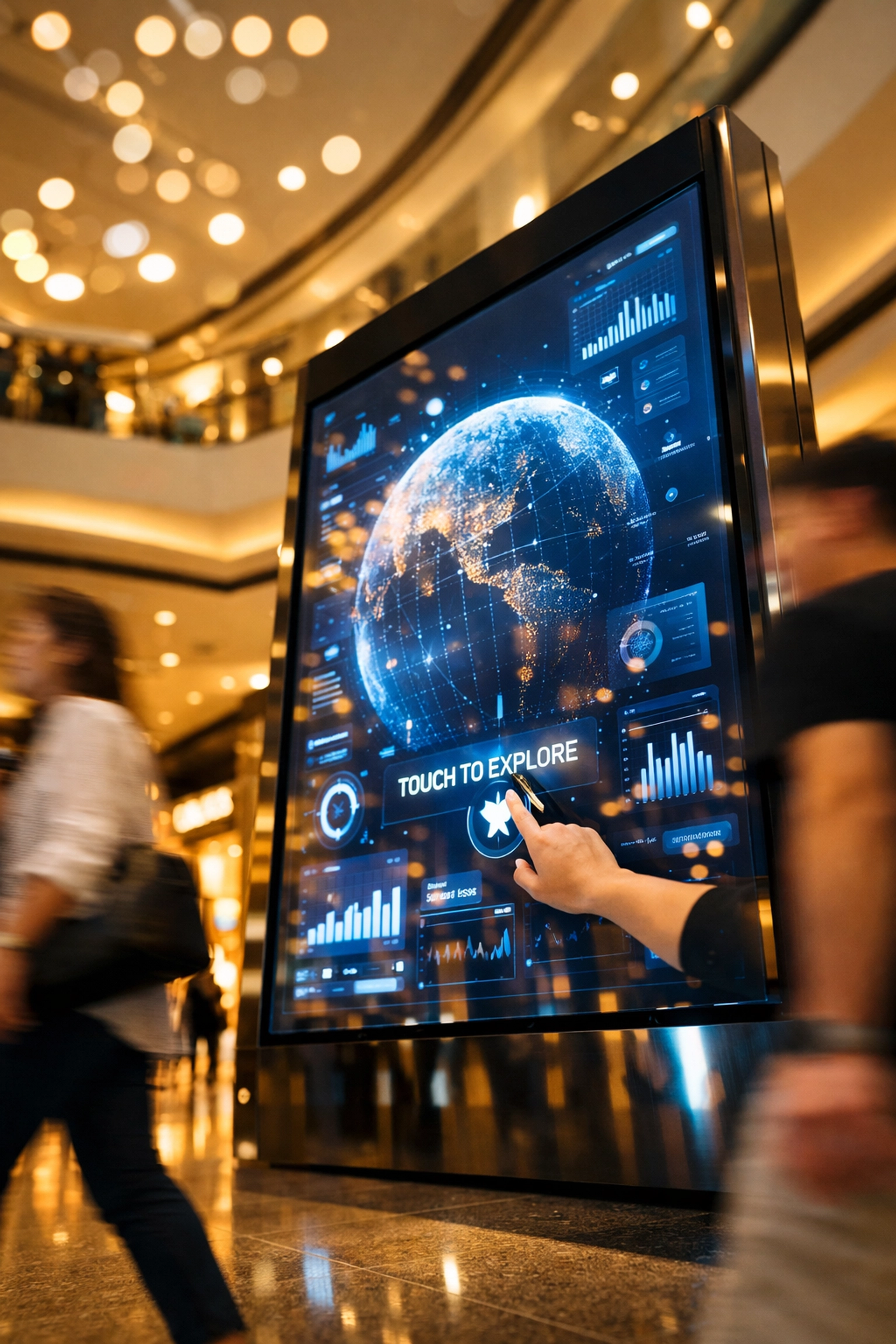
The gaps traditional OOH can't fill:
Zero attribution tracking: No way to connect ad exposure to store visits or purchases
Demographic guesswork: Foot traffic counts don't reveal age, interests, or buying intent
No engagement metrics: Impossible to know if someone glanced at your ad or studied it for 30 seconds
Static inventory: Premium locations stay booked for months with no flexibility for performance optimization
No feedback loop: Brands run campaigns blind, with no real-time data to adjust creative or messaging
Retail media networks solved these problems online by leveraging first-party purchase data and digital tracking. Now they need to solve them in physical spaces where Hong Kong consumers actually make buying decisions.
What In-Store Retail Media Actually Requires
US in-store retail media spending is expected to jump 33.1% in 2026, but not because brands suddenly love billboards. The shift happens when physical retail delivers the same measurable, data-rich environment that digital advertising platforms offer, with one critical advantage: proximity to the actual point of purchase.
Hong Kong retailers sitting on goldmines of first-party data, purchase histories, loyalty program behavior, payment patterns, but struggle to activate that data in real-world environments. A shopper who bought skincare products three times online walks past your cosmetics counter in Harbour City, and you have no way to serve them a personalized offer in that moment.

In-store retail media networks need three capabilities that traditional signage can't provide:
Real-time recognition technology that identifies what shoppers engage with, products, displays, art installations, without requiring them to download apps or scan QR codes. The friction of asking Hong Kong consumers to pull out their phones kills engagement before it starts.
Behavioral data capture that connects physical movement patterns to digital identity in privacy-compliant ways. Where did they enter? What caught their attention? How long did they engage? Which path led to conversion?
Dynamic content delivery that adapts based on context, time of day, current inventory, shopper demographics, even weather. The same screen space should serve different messages to morning commuters versus evening shoppers.
AR portals built on computer vision and AI object recognition deliver all three without the friction that makes traditional interactive retail fail in Hong Kong's fast-paced environment.
How AR Portals Turn Physical Space Into Addressable Media
Here's how ORB's approach works in practice: A shopper walks through Harbour City and their phone camera (or a strategically placed AR portal screen) recognizes a luxury handbag display through computer vision. Instantly, an AR experience activates, product details, styling suggestions, limited-time offers, tailored to that specific shopper's profile if they're a loyalty member, or generalized engagement if they're new.
The magic isn't the AR visual experience. The magic is the data stream generated every time someone engages.
Traditional OOH tells you nothing. An AR portal tells you everything: which products attracted attention, demographic patterns of engaged shoppers, peak engagement times, average interaction duration, conversion correlation between AR engagement and in-store purchases, and A/B test results on different creative approaches, all while respecting privacy regulations that Hong Kong consumers increasingly demand.
The data layer AR portals unlock:
Product-level engagement: Track which specific items generate interest, not just foot traffic to a section
Journey mapping: Connect AR interactions to subsequent store visits and purchases through anonymous identifiers
Audience segmentation: Build profiles based on what people engage with, creating targetable segments for future campaigns
Real-time optimization: Shift messaging, creative, and offers based on what's actually working in the moment
Attribution modeling: Finally prove that in-store media drives measurable sales lift
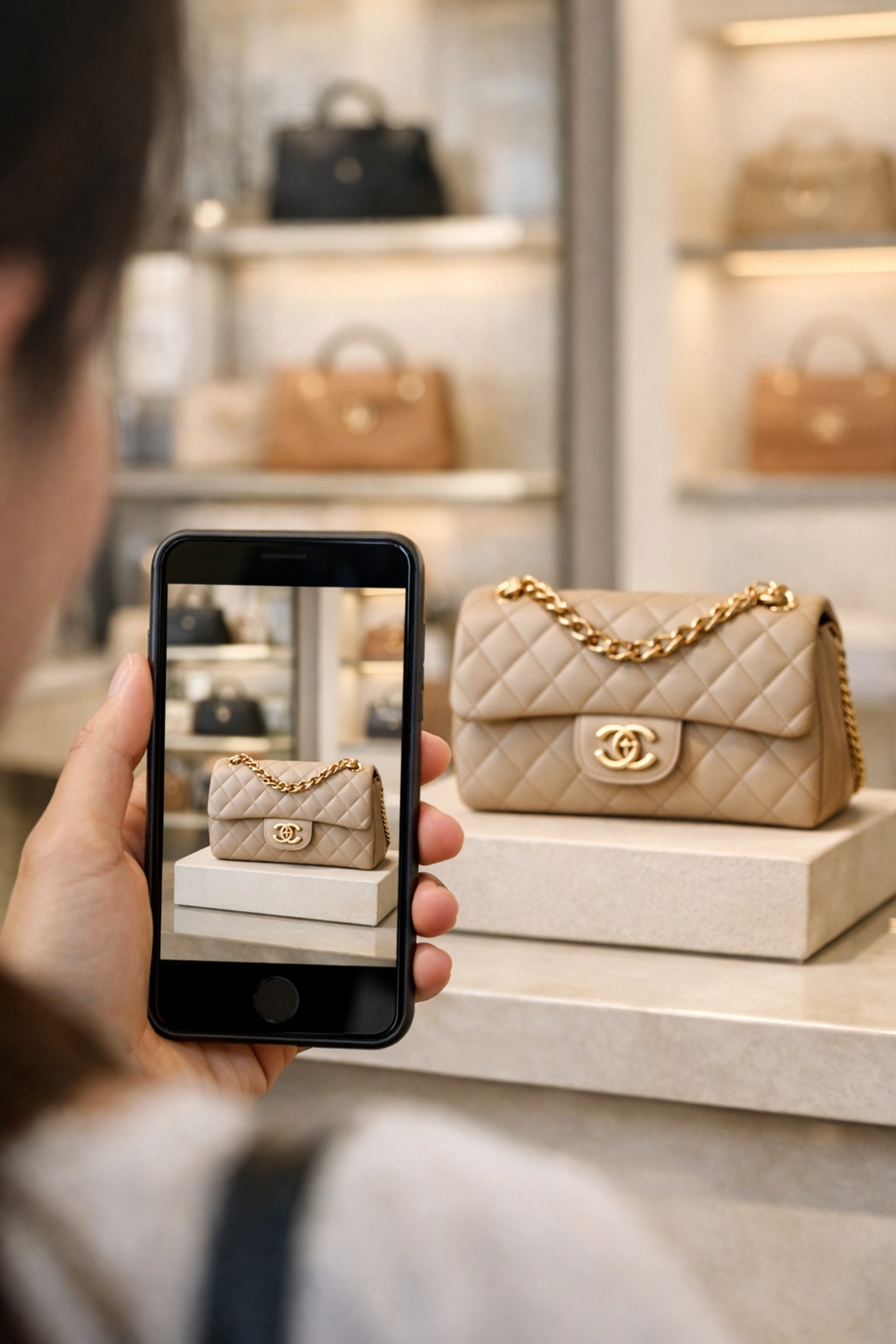
For Hong Kong shopping malls competing with e-commerce convenience, this transforms the value proposition. Landlords aren't just renting space, they're selling access to an addressable, measurable media network that delivers results brands can actually track.
The Hong Kong Retail Reality Check
TST and Causeway Bay aren't just shopping destinations, they're battlegrounds where physical retail fights to prove its value against online convenience. Mainland tourists want Instagram-worthy experiences. Local shoppers want efficiency. Luxury brands demand proof their marketing spend drives revenue.
AR portals solve for all three simultaneously. The experience creates social media moments. The interaction requires zero friction, no apps to download, no QR codes to scan, just point and engage. The data proves ROI in ways traditional retail media never could.
Consider the typical luxury brand activation in a Hong Kong mall: beautiful display, brand ambassadors handing out samples, maybe a photo opportunity. It costs hundreds of thousands, delivers unmeasurable "brand awareness," and disappears after two weeks with zero data about what worked.
Now imagine that same activation powered by AR portals. Every engagement tracked. Every sample request logged. Every photo share connected back to the person's shopping behavior. Dynamic content that shifts based on who's engaging. Real-time dashboards showing what's resonating with different demographics.
Same physical footprint. Exponentially more valuable data.
Beyond Retail: Museums, Heritage Sites, and Tourism Applications
Hong Kong's museums and heritage sites face similar challenges: how do you make historical artifacts engaging for smartphone-addicted visitors while gathering insights about what resonates? Traditional audio guides provide information but capture zero data about engagement patterns or visitor preferences.
AR portals transform these institutions into retail media networks for cultural content. Point at a historical artifact, receive contextual AR information tailored to your interests (history buff versus casual tourist), engage with gamified exploration that guides you through exhibits, and generate anonymized data showing which pieces capture attention and which get ignored.
For government tourism boards and trade entities promoting Hong Kong's cultural assets, this data becomes invaluable. Finally, you can prove which heritage sites drive engagement, optimize visitor experiences based on actual behavior, justify preservation funding with measurable tourism impact, and create personalized journey recommendations that increase dwell time.
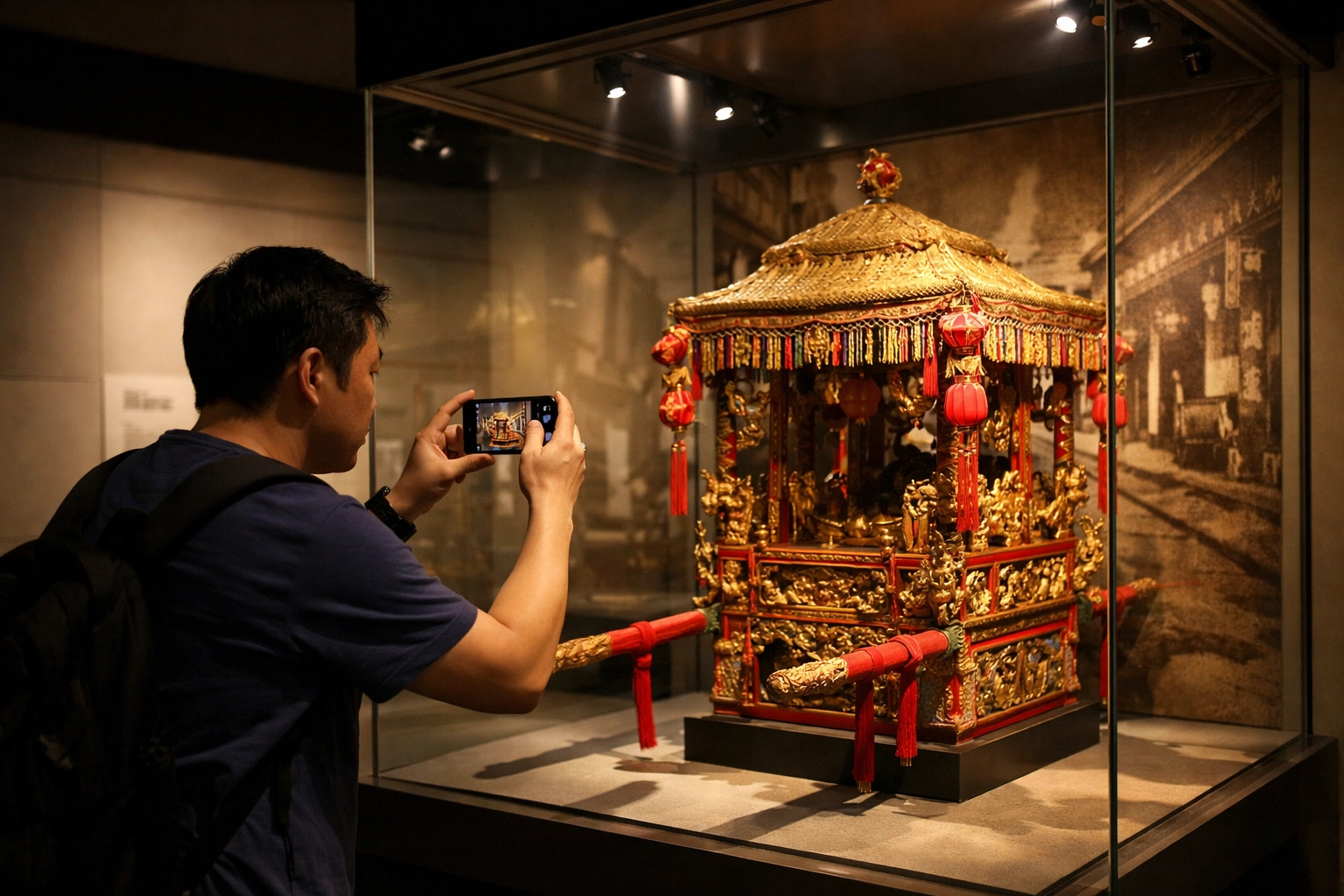
Business clubs and private members' organizations leveraging the same technology discover new sponsorship revenue. The cigar lounge or whiskey tasting room becomes addressable media space where luxury brands reach verified high-net-worth audiences with measurable engagement data.
The Infrastructure Reality
Hong Kong's dense urban environment and premium real estate costs make traditional retail media infrastructure expensive. Digital screens require power, content management systems, and ongoing maintenance. Large-scale rollouts demand significant capital investment before proving ROI.
AR portals flip the model. The infrastructure already exists in shoppers' pockets. Your investment focuses on computer vision systems that recognize objects and spaces, cloud-based content delivery that serves personalized AR experiences, and analytics platforms that transform engagement into actionable insights.
For shopping mall operators, this means activating hundreds of touchpoints across properties without installing hundreds of screens. The Chanel boutique window, the Nike display, the art installation in the central atrium: all become interactive media inventory once computer vision recognizes them.
Key implementation advantages:
Asset-light deployment: Leverage existing smartphones rather than installing proprietary hardware
Scalable instantly: Add new recognition targets through software updates, not construction
Lower operational costs: No physical screens to maintain or replace
Flexible creative: Update AR experiences remotely without printing new materials
Privacy-compliant: Engagement tracking without facial recognition or personal data collection
Shaping Hong Kong's Retail Media Future
The question isn't whether retail media networks will dominate Hong Kong's shopping malls, museums, and tourism destinations: US market trends already forecast that inevitability. The question is which technology foundation will power that transformation.
Traditional digital OOH evolved into today's programmatic screens, delivering some targeting and basic metrics. But that approach imports the limitations of online advertising: banner blindness, ad fatigue, limited engagement: into physical space.
AR portals represent something different: media infrastructure that makes physical objects and spaces addressable while preserving the tactile, exploratory nature that makes real-world retail irreplaceable. When done right, shoppers don't feel marketed to: they feel empowered with information exactly when they need it.
Is your institution ready to transform physical space into measurable, data-driven media?
Contact ORB Intelligence to discover how AR portals can unlock the retail media potential hiding in your galleries, heritage sites, or retail properties: with technology built for Hong Kong's unique market demands.
